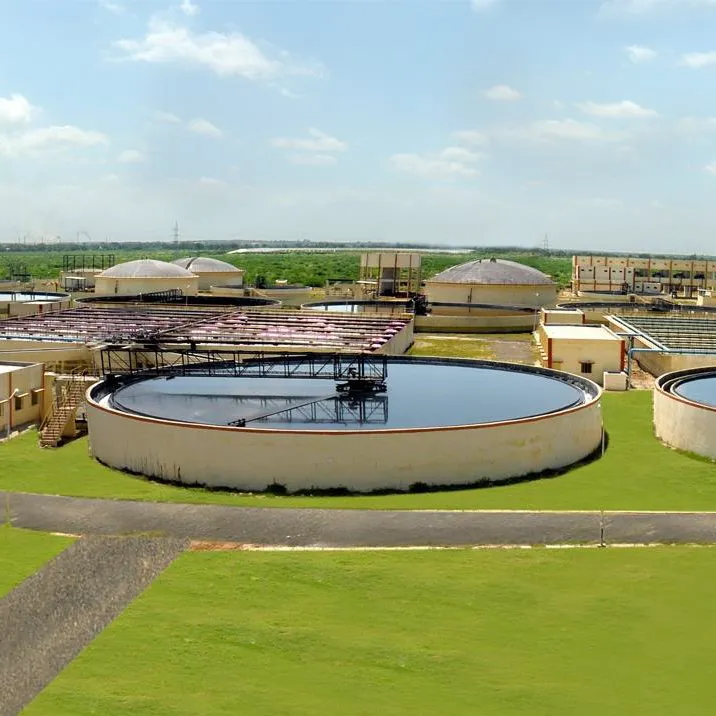
Large-scale municipal wastewater infrastructure for the Ahmedabad Municipal Corporation.
Location
Pirana, Ahmedabad
Procedure
CASP & DAS (Diffused Aeration)
Contract Type
Turnkey EPC
Capacity
180 MLD
Municipal Infrastructure Scale
The Pirana Sewage Treatment Plant (STP) represents a significant milestone in Ahmedabad’s environmental infrastructure. Engineered to handle a massive hydraulic capacity of 180 MLD, the facility serves as a primary treatment hub for the Ahmedabad Municipal Corporation.
The project involved the comprehensive design and commissioning of massive civil structures and electro-mechanical systems capable of managing the high-volume domestic sewage generated by the city’s expanding southern and central zones.
Strategic Goals
The primary objective was to modernize the city’s sewage disposal system to prevent the discharge of untreated effluent into the Sabarmati River. By implementing a high-capacity biological treatment line, the project aimed to achieve stringent BOD (Biochemical Oxygen Demand) and TSS (Total Suspended Solids) reduction.
The strategic goal was to create a sustainable, high-throughput facility that could scale with the city’s urban density while maintaining absolute adherence to national discharge mandates.
Technical Constraints
One of the principal challenges was engineering a system robust enough to handle the extreme diurnal flow variations typical of large Indian municipalities. The design had to account for high concentrations of organic matter and grit, which are common in combined sewage systems.
Furthermore, implementing such a large-scale project required precise site management and the integration of heavy-duty mechanical hardware that could operate 24/7 without risking process instability or structural fatigue.
Engineering Intervention
The solution centered on the Conventional Activated Sludge Process (CASP), a time-tested biological treatment method optimized for large-scale municipal applications.
To enhance efficiency, a Diffused Aeration System (DAS) was integrated into the aeration basins. Unlike traditional surface aerators, the DAS utilizes a network of fine-bubble diffusers to maximize oxygen transfer efficiency.
This technology ensures uniform dissolved oxygen (DO) levels throughout the tanks, promoting superior microbial activity, reducing sludge volume, and significantly lowering the overall energy footprint of the 180 MLD operation.
Physical Pre-Treatment
Removal of large solids and inorganic debris to protect downstream mechanical equipment and pumps.
Primary Clarification
Reducing the organic load by allowing heavy suspended solids to settle, preparing the water for biological treatment.
Biological Aeration (CASP & DAS)
Introducing high levels of dissolved oxygen to facilitate the rapid microbial breakdown of organic pollutants.
Secondary Sedimentation
Clarifying the treated water by separating the "active" biomass from the clean effluent stream for recycling.
Disinfection & Discharge
Ensuring the 180 MLD stream meets all Sabarmati River discharge standards for safety and environmental health.
Stage One
Stage Two
Stage Three
Stage Four
Stage Five
Project Partners
Fostering high-impact collaborations to deliver resilient environmental infrastructure and localized engineering excellence.