Kosad 220 MLD: Advanced BNR Upgrade

Pioneering Sustainable Wastewater Management with Advanced BNR and Energy Recovery
Location

Kosad, Surat, Gujarat, India

Procedure

EPC – Augmentation & Upgradation

Contract Type

Turnkey EPC Contract

Capacity

220 MLD

Kosad STP Augmentation: Scaling Sustainable Treatment for Surat's Growing Needs

The Kosad Sewage Treatment Plant, operated by Surat Municipal Corporation, underwent a landmark augmentation to increase capacity from 134 MLD to 220 MLD while staying strictly within the existing site footprint. Completed in 2024, this project integrates cutting-edge biological nutrient removal (BNR) technologies — including Integrated Fixed-Film Activated Sludge (IFAS), Moving Bed Biofilm Reactor (MBBR), and Sequencing Batch Reactor (SBR) processes — to deliver exceptional effluent quality (BOD and TSS ≤ 5 mg/L).

The upgrade also incorporates 0.6 MW (600 kWe) biogas-based power generation, transforming organic waste into renewable energy for on-site use and reducing the plant’s carbon footprint. Final treated effluent supports river recharge by discharging upstream of the weir in the Tapi River, promoting water reuse and recycling as a vital sustainable resource for Surat’s urban and industrial ecosystem. This project exemplifies efficient land use, minimal civil modifications, and forward-thinking environmental engineering in one of India’s fastest-growing cities.
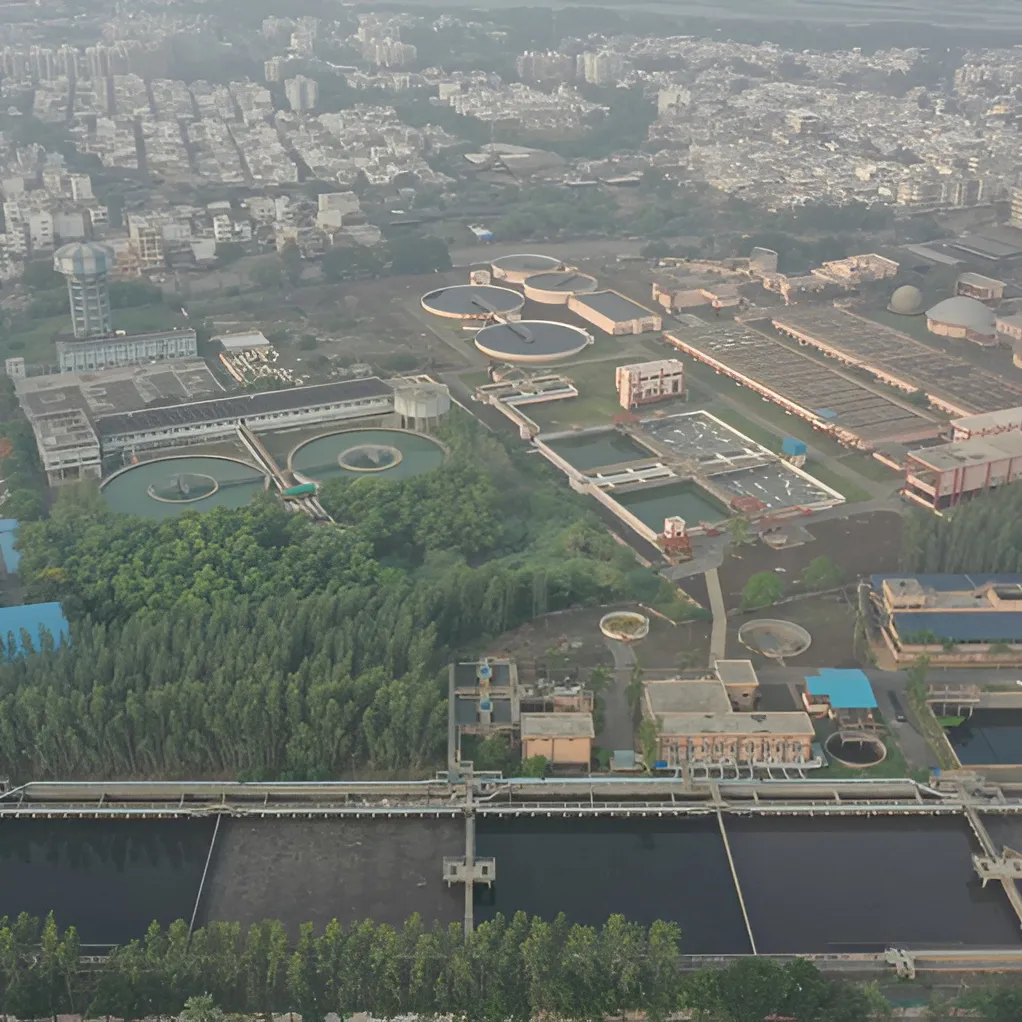
Achieving High-Performance Treatment, Energy Self-Sufficiency, and Environmental Compliance

The primary objectives were to:

  • Accommodate an additional 86 MLD of hydraulic and organic load driven by Surat’s rapid urbanization and population growth in the North Drainage Zone.
  • Upgrade treatment performance to meet stringent discharge standards (BOD ≤5 mg/L, TSS ≤5 mg/L) with enhanced Biological Nutrient Removal (BNR) for nitrogen and phosphorus control.
  • Optimize the existing site by leveraging compact, high-rate technologies (IFAS, MBBR, SBR) to avoid major land acquisition or extensive civil reconstruction.
  • Integrate biogas capture and utilization for 0.6 MWe on-site power generation, promoting energy recovery and operational sustainability.
  • Enable safe, high-quality effluent discharge/reuse into the Tapi River, contributing to Surat’s circular water economy and pollution abatement goals.

Overcoming Space Constraints and Stringent Performance Demands

Key challenges included:

  • Severe site footprint limitations — the entire 86 MLD capacity increase had to be accommodated without expanding the land area, requiring highly efficient, compact treatment processes.
  • Need for ultra-low effluent parameters (BOD/TSS ≤5 mg/L) while handling variable sewage flows and loads typical of a major municipal system.
  • Integrating advanced BNR without disrupting ongoing operations of the existing 134 MLD plant.
  • Ensuring reliable biogas production and power generation (0.6 MWe) from anaerobic digestion/sludge in a fluctuating organic load environment.
  • Minimizing civil modifications to control costs, timelines, and environmental impact during construction in an active urban wastewater facility.

Innovative Hybrid Technologies for Compact, High-Efficiency Treatment

The project deployed a sophisticated hybrid treatment train combining IFAS, MBBR, and SBR configurations optimized for BNR. These attached-growth and suspended-growth systems maximize biomass retention and nutrient uptake in a smaller footprint compared to conventional activated sludge.

Key solutions:

  • Phased integration of MBBR media for enhanced BOD/COD removal and nitrification in compact reactors.
  • IFAS zones to boost biological phosphorus removal and overall process stability.
  • SBR sequencing for flexible operation, denitrification, and final polishing to achieve ≤5 mg/L BOD/TSS.
  • Advanced sludge handling with anaerobic digestion to maximize biogas yield, feeding a 0.6 MWe genset for captive power.
  • Tertiary polishing (if implied by ultra-low standards) and precise process controls to ensure consistent performance.

This approach minimized new civil structures, accelerated commissioning, and delivered energy-positive operations while meeting or exceeding CPCB/GPCB norms.

Project Partners

Fostering high-impact collaborations to deliver resilient environmental infrastructure and localized engineering excellence.

Interested in learning more about our water treatment expertise?

Explore the Insights

Access our latest research, reports, and environmental guides.